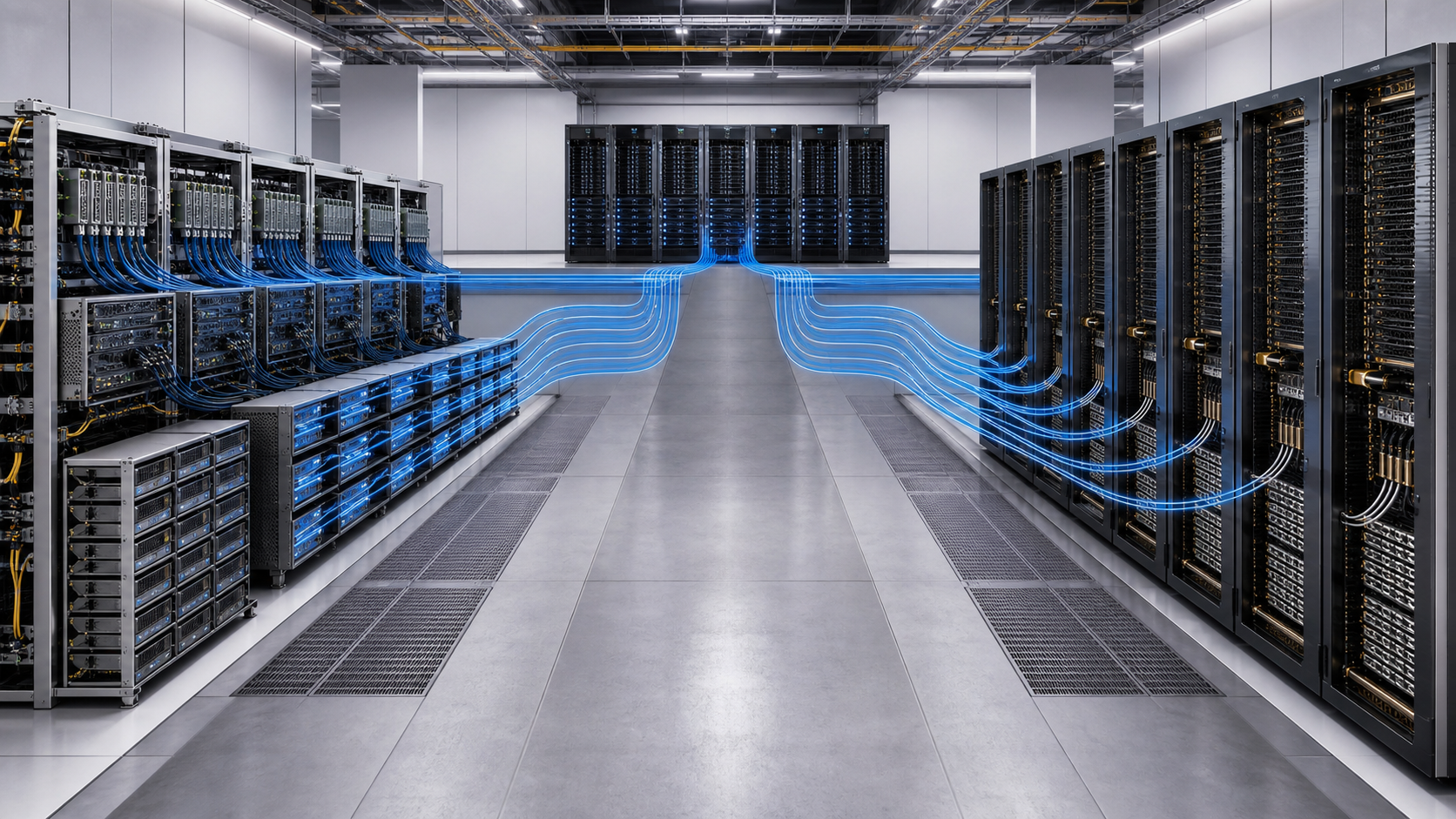
Putting community Lustre beside DDN EXAScaler can look like comparing a project with itself. EXAScaler is built on Lustre, so both share familiar concepts: Metadata Targets, Object Storage Targets, LNet clients and parallel file access. The difference appears after the source code. One route asks your team to select, integrate, tune and support the stack; the other buys DDN's distribution, qualified systems, management layer and escalation path.
That makes this a useful comparison for serious GPU clusters. It also makes a careless "Lustre versus DDN" title misleading unless DDN EXAScaler is named.
Executive summary
Choose community Lustre when the organisation has proven Lustre engineers, wants control over server and storage design, can run its own qualification programme and accepts operational ownership. It can be the better economic choice for a stable research environment that already operates Linux, Slurm and a high-speed fabric.
Choose DDN EXAScaler when the file system sits on the production path of a costly AI or HPC cluster and one supported product is worth more than source-level freedom. DDN packages Lustre expertise with validated storage systems, management, monitoring and support. Its public performance statements are vendor claims, so the final design still needs a proof test with the buyer's clients and framework.
Neither route fixes poor data layout or an undersized network. GPUMachines can map the selected storage platform to GPU-node count, checkpoint behaviour, fabric ports, rack power and the GPU cluster configuration.
Community Lustre and EXAScaler in one table
| Decision area | Community Lustre | DDN EXAScaler | | --- | --- | --- | | Filesystem base | Upstream open source Lustre | Commercial Lustre-based distribution and platform | | Hardware | Chosen and qualified by the operator or integrator | DDN-qualified systems and reference configurations | | Tuning | Owned by the operator | Product defaults, DDN engineering and support guidance | | Monitoring and lifecycle | Built from community and site tooling | Integrated commercial management and support tooling | | Upgrade responsibility | Site plans, tests and executes | Vendor-supported release and upgrade path, with customer planning still required | | Escalation | Internal team, community and optional third-party support | Contracted DDN support | | Source and design freedom | Highest | More constrained by the supported product matrix | | Best buyer | Experienced HPC storage team | AI/HPC operator buying an accountable service level |
The filesystem lineage narrows the architectural gap. It does not erase the product gap.
What DDN adds to Lustre
DDN describes EXAScaler as its high-performance parallel filesystem platform for AI training, inference and HPC. It combines a DDN Lustre distribution with DDN storage hardware, management and data services. DDN also supplies EXAScaler technology for Google Cloud Managed Lustre, which gives buyers a consumption route beyond an on-premise appliance.
The commercial value sits in five areas.
First, DDN chooses and tests the hardware and software combination. Storage controllers, enclosures, media, network interfaces, filesystem release and management tools arrive as a defined platform rather than a list of parts from several suppliers.
Second, DDN applies tuning and patches from its Lustre engineering work. A community team can tune Lustre too, but it must know which settings matter and retest them after a change.
Third, EXAScaler includes operational features and a management layer intended to reduce manual administration. Product capabilities change by release, so check the quoted version rather than relying on a generic web page.
Fourth, the support contract creates an escalation route across more of the stack. Confirm where that boundary stops: client kernels, InfiniBand or Ethernet fabric, application framework and data-movement tools may still involve other teams.
Fifth, DDN offers reference architectures and field experience from large AI and HPC estates. Reference customers are useful evidence about maturity; they are not a substitute for sizing your own file count, checkpoint burst and client topology.
What community Lustre keeps in your hands
Community Lustre gives the operator access to upstream software without a proprietary filesystem licence. The site can choose servers, target storage, RAID or software-defined data protection, NICs and management tooling. It can adopt upstream releases according to its own policy and build site-specific automation around familiar Linux components.
That freedom is valuable in laboratories with unusual hardware, long system lifecycles or engineers who contribute to Lustre. It also avoids paying for commercial packaging the team may already have built.
The cost is qualification. Someone must test firmware, storage failover, fencing, multipath, client compatibility and performance under failure. Someone must keep that matrix current. If the only Lustre specialist leaves, the design risk changes overnight even though the hardware has not moved.
Performance: do not compare logos
DDN publishes very large throughput, checkpoint and GPU-utilisation claims for EXAScaler. Those figures describe selected DDN systems and test conditions. They do not establish that every EXAScaler quote will outperform every community Lustre build.
Both routes can scale bandwidth by adding Object Storage Servers, Object Storage Targets and client paths. Performance depends on the media behind each target, server CPU and bus bandwidth, LNet transport, switch topology, file striping, client concurrency and application I/O. DDN's advantage is that it sells qualified combinations and has tuning experience across its estate. Community Lustre's advantage is that a capable team can design directly around a known workload without staying inside one vendor's catalogue.
A buyer should request measurements for:
- Sustained dataset reads from the planned number of GPU clients.
- Coordinated checkpoint writes and restore time using the actual training framework.
- Small-file and namespace operations at expected user concurrency.
- Mixed read, write and metadata traffic rather than isolated peaks.
- One failed storage component or path while the service remains live.
- Performance above 70 or 80 per cent capacity, not only on an empty array.
Use the same protection settings and client mounts in both tests. Otherwise the result compares safety policies, not platforms.
Metadata design still belongs to the buyer
EXAScaler does not repeal Lustre's metadata architecture. Metadata Servers and Metadata Targets still need enough CPU, memory, low-latency storage and failover capacity. Directory layouts and Metadata Target allocation influence how file creation and lookup work scale.
An AI dataset made of large shards may barely trouble metadata. A research estate containing hundreds of millions of images, logs, environments and tiny result files can make metadata the first limit. Ask DDN how the proposed system scales MDT capacity and service rate. For community Lustre, model the same requirement and test directory striping, Distributed Namespace Environment features where appropriate, and client behaviour.
No storage vendor can rescue an application that runs a full recursive directory scan before every epoch without cost. Sometimes the right fix is a dataset format change.
Checkpointing exposes the difference between product and project
Checkpoint workloads create sharp write bursts, often followed by synchronisation across training ranks. The storage tier needs bandwidth, but the operating model matters too. If a checkpoint suddenly takes twice as long after a firmware change, how quickly can the team isolate the cause?
With community Lustre, the site owns telemetry across clients, LNet, servers, targets and media. Mature teams may prefer that visibility and have better local context than an outside supplier. Less experienced teams may spend days proving which layer is at fault.
With EXAScaler, DDN can collect product support data and apply its own filesystem and hardware knowledge. The support case still needs timestamps, job details and fabric evidence. Buying support changes the escalation path; it does not remove the need for disciplined observability.
Hardware freedom versus a qualified bill of materials
Community Lustre supports a wide range of designs. Flash MDTs can sit beside HDD OSTs; all-NVMe systems can chase latency and checkpoint rate; dense capacity nodes can serve large sequential datasets. That range lets an integrator tune cost and performance closely.
It also creates tempting mistakes. A high drive count behind limited SAS expanders, too few CPU lanes for NVMe, one NIC serving several fast targets, or a failover pair without enough surviving bandwidth can undermine the whole system.
DDN narrows choice to systems it supports. This may raise acquisition cost or limit substitutions, but it removes many untested combinations. Ask how expansions must be purchased, whether older and newer generations can coexist, and what happens to support if third-party switches or clients sit in the path.
Network and client integration
Both platforms depend on LNet between clients and Lustre services. The design may use InfiniBand, Ethernet or routed combinations. GPU clusters often share the same physical fabric between storage traffic and collective communication, which raises a hard question: what happens when every rank writes a checkpoint while the compute job also exchanges gradients?
Separate rails or traffic classes can reduce interference. So can a dedicated storage network. The correct answer depends on switch ports, oversubscription and budget. DDN can advise on supported layouts around EXAScaler, while the site or integrator still needs to reconcile them with the GPU fabric.
Client kernels and drivers deserve early testing. A supported EXAScaler backend does not automatically support every Linux distribution, OFED build or container-host configuration on the GPU nodes. Community Lustre has the same issue with a wider responsibility boundary.
Data protection and lifecycle
Lustre availability normally relies on protected targets and server failover. Valuable data still needs independent protection. DDN offers additional data-management capabilities around EXAScaler, while community sites can integrate object storage, tape, backup tools and hierarchical-storage workflows of their choice.
Compare recovery objectives rather than feature names:
- How quickly must a deleted checkpoint or dataset return?
- Is a snapshot enough, or must a copy survive cluster compromise?
- How long can archive staging take before GPUs are allocated?
- Can the organisation restore the namespace and data at site-loss scale?
- Who tests recovery, and how often?
The cheapest terabyte is expensive if the restoration process is only a diagram.
Staff cost and concentration risk
Community Lustre economics look strongest when the skills already exist and are shared across a large service. One additional filesystem may add little marginal labour to an established HPC team.
For a small AI company, hiring or retaining that expertise can dominate the difference. Two engineers who understand the entire platform may also create concentration risk. Holidays, departures and simultaneous incidents do not respect the storage budget.
DDN support spreads some of that risk to a supplier, though the customer still needs operators who understand capacity, clients, jobs and facility procedures. Compare support response, severity definitions, remote-access policy, spare-part coverage and upgrade assistance rather than buying a vague promise of enterprise support.
When community Lustre is the better choice
It is hard to beat community Lustre when all of the following are true:
- The site already runs Lustre successfully and has more than one capable administrator.
- The workload needs a high-throughput POSIX scratch or project tier rather than a broad data platform.
- Hardware freedom or a specific local supply chain matters.
- The organisation can qualify servers, storage, networking and client kernels.
- Maintenance windows and support expectations match an internally run service.
- Source access and upstream alignment have strategic value.
In that setting, paying for a product may duplicate engineering the team already owns.
When DDN EXAScaler is the safer purchase
EXAScaler becomes persuasive when a large GPU investment depends on predictable checkpoint and dataset service, the deployment deadline is firm, and contractual support has real business value. It also fits buyers who want Lustre's operating semantics but need a supplier to qualify and support the integrated platform.
National labs and expert HPC centres also buy DDN; commercial support is not only for beginners. At very large scale, the value may come from engineering depth, hardware integration and faster fault resolution rather than ease of use.
When neither is the right platform
Lustre may be unnecessary for an inference estate that loads each model once onto local NVMe and serves requests from memory. A smaller NFS service, object store or managed cloud platform could be simpler.
Teams needing block storage, S3 applications and Kubernetes volumes from one open platform should examine Ceph. Buyers wanting a commercial flash file tier with integrated object tiering should read Lustre versus WEKA. Those seeking a broader multiprotocol data platform should compare Lustre with VAST Data.
Questions for a DDN proposal
Ask DDN to state the quoted EXAScaler release, supported client matrix, protection design, expected usable capacity, network ports, rack power and expansion method. Request workload-specific evidence rather than only aggregate peaks.
Clarify which management and data services are included, which need separate licences, how upgrades work and whether remote support requires a particular access method. Ask for reference customers with a similar client count and job pattern.
Finally, test data exit. A POSIX filesystem should be portable in principle, but moving petabytes takes time and bandwidth. Know how the organisation would migrate away before it signs.
Questions for a community build
Name the integration owner and the support path. List every component that needs qualification: motherboard, HBA, RAID layer, enclosure, drive firmware, NIC, switch, Linux kernel, Lustre client and monitoring stack.
Write the failure tests before ordering. Include loss of an MDT path, OSS failover, degraded storage, switch-link failure and a full target. Decide how operators will collect evidence and which events trigger a job drain.
If those tasks have no owner, the community design is not cheaper. It is incomplete.
GPUMachines configuration guidance
GPUMachines can build storage-server and fabric options for either path. For community Lustre, that includes metadata and object-storage server selection, CPU and memory balance, flash or HDD target layout, NIC placement, redundant paths and management nodes. For DDN, the work shifts towards integrating the quoted platform with GPU servers, switches, racks and hosting.
We also check physical details that slide decks omit: rail depth, lift access, cable reach, service clearance, per-rack current and the heat from storage switches. A file system cannot feed GPUs if the facility cannot feed the rack.
On-premise operation is not mandatory. Buy & Host can place dedicated GPU and storage infrastructure in a managed facility, while GPU Cloud can absorb temporary demand or a proof phase.
FAQ
Is EXAScaler compatible with standard Lustre clients?
It is Lustre-based, but compatibility depends on the EXAScaler release, client version, kernel and network stack. Use DDN's supported client matrix for the quoted system and test the exact GPU-node image.
Can community Lustre match DDN performance?
It can match or exceed a given system in some designs, because performance comes from hardware, topology and tuning as well as distribution. That statement proves nothing about your build. Compare complete configurations under the same workload and failure conditions.
Does EXAScaler remove the need for Lustre skills?
No. It reduces integration and gives the team a vendor escalation route, but operators still need to understand mounts, capacity, jobs, clients and normal filesystem health.
Is DDN only suitable for very large clusters?
DDN is best known for large AI and HPC deployments, but product fit depends on the current portfolio and service target. Ask for a right-sized proposal; do not assume a large-system vendor is economical at every scale.
Can we start with community Lustre and move to EXAScaler?
Possibly, but plan migration and version compatibility with DDN. Shared filesystem lineage does not make an in-place conversion automatic. A data copy may still be the safest route.
Which route is better for checkpoints?
Both can handle checkpoint workloads. EXAScaler buys DDN's tuned product and support around that use case; community Lustre can work very well when the site engineers and validates it. Test checkpoint completion and restore, not only write bandwidth.
Do we still need object storage?
Often yes. Lustre can hold active data and checkpoints, while object storage keeps the durable corpus, archive or cloud-facing data. DDN offers surrounding data-management options, but the correct tiering design depends on recovery and workflow requirements.
Verdict
Community Lustre versus DDN EXAScaler is a make-or-buy decision inside the Lustre family. The community route wins when an experienced team wants control and can prove its own design. EXAScaler wins when validated integration, commercial support and DDN's engineering reduce more risk than the contract adds cost.
For a production AI cluster, the strongest argument is not that one filesystem is theoretically faster. It is that the chosen team can keep the service within target during growth, upgrades and failure.
Review a community Lustre or DDN EXAScaler deployment with GPUMachines.
Sources and further reading
- Lustre Software Release 2.x Operations Manual
- Lustre project wiki
- DDN EXAScaler product page
- DDN description of Google Cloud Managed Lustre and EXAScaler
- Google Cloud Managed Lustre general-availability announcement from DDN
DDN's performance and customer statements are vendor claims. They should inform a shortlist, then be checked with the proposed system and workload.