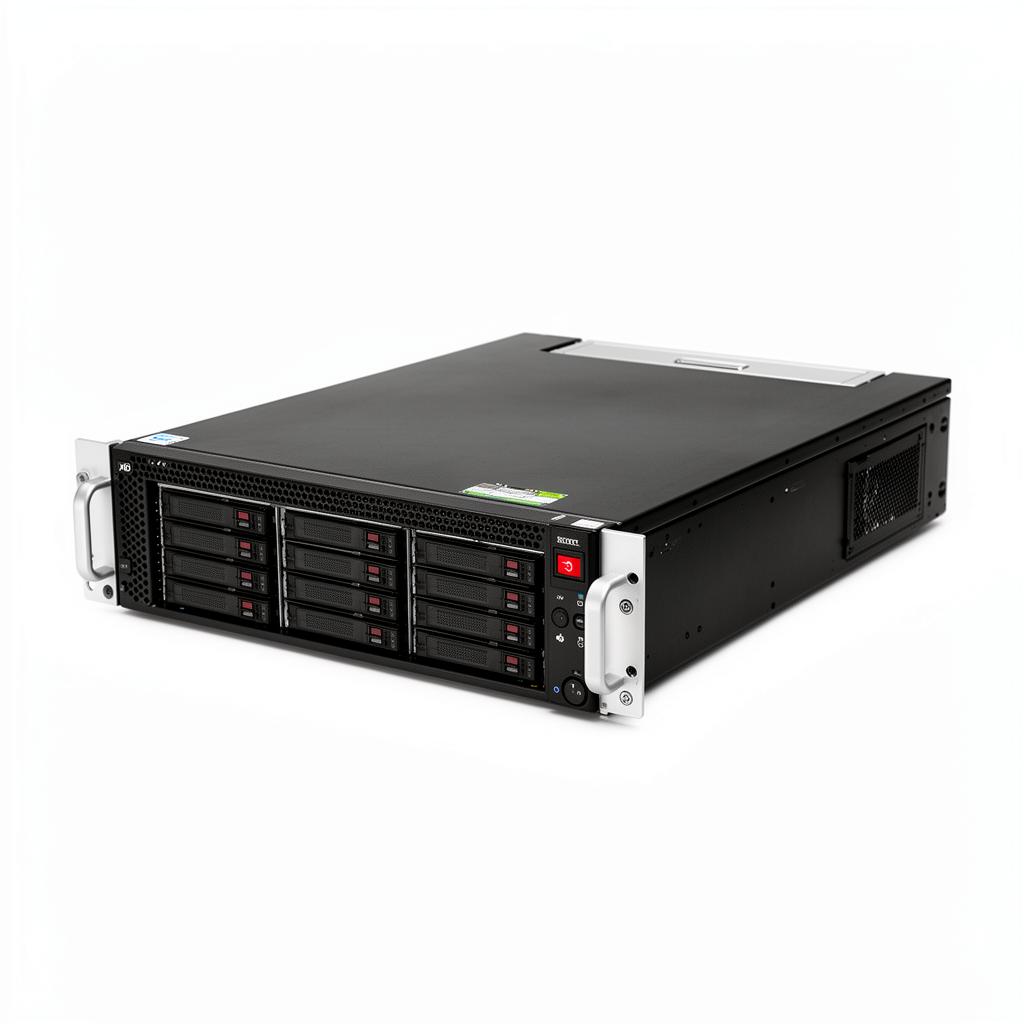
GIGABYTE's E163-P30 name describes a platform family; the orderable suffix identifies the actual server. Keeping those levels separate prevents a family page from competing with the exact E163-P30-AAG1 review or sending buyers to a configurator under a shortened model name.
AmpereOne also changes the software question. An ARM server may suit containerised services, cloud-native control planes and applications already built for AArch64, while a binary-only x86 dependency can stop a project before hardware efficiency matters. Buyers should inventory operating-system images, drivers, agents and third-party packages before comparing core counts.
Edge operation adds another test: recovery without an engineer beside the rack. Firmware updates, remote console access, boot media and replacement procedures should be proved before the node is sent to a branch or unmanned site.
This page now explains the AmpereOne 1U edge design at family level. For current specifications, product linkage and configuration, use the exact-model review referenced below.
Executive Summary
The Gigabyte E163-P30 is best suited to edge teams, managed service providers, labs, and infrastructure buyers that need compact inference or control-plane capacity close to users, sensors, or data sources.
The headline platform is configuration-dependent accelerator support, supported by AmpereOne processor, 16 DIMM slots Dual 800W PSU, Air Cooling ARM based, energy, and Dual 800W PSU. The exact configuration should be checked in the configurator because GPU, RAM, storage, networking, and power choices are configuration-dependent.
It is overkill when the workload only needs a small hosted GPU instance, a lighter workstation, or a proof-of-concept environment with no defined deployment plan.
Continue to the E163-P30-AAG1 technical review and configurator guidance for the current exact model.
Key Specifications
| Area | Specification | | --- | --- | | Form factor | 1U | | CPU platform | AmpereOne processor | | CPU sockets | Configuration-dependent | | GPU support | configuration-dependent accelerator support | | Memory | 16 DIMM slots Dual 800W PSU, Air Cooling ARM based, energy | | Storage | Configuration-dependent local NVMe or drive layout | | PCIe expansion | Configuration-dependent PCIe expansion and riser layout | | Networking | Configuration-dependent Ethernet, management, or high-speed fabric options | | Power | Dual 800W PSU | | Best-fit workloads | compact inference services; edge AI support workloads; regional data processing; robotics or vision pipelines |
Platform Highlights
- Workload fit: Gigabyte E163-P30 should be considered around the job it needs to run: inference, rendering, workstation use, edge services, simulation, or supporting infrastructure.
- CPU and memory balance: AmpereOne processor and 16 DIMM slots Dual 800W PSU, Air Cooling ARM based, energy should be sized around host-side preprocessing, user concurrency, model serving processes, and storage services.
- GPU and PCIe planning: configuration-dependent accelerator support. Check slot spacing, accelerator power, cable routing, riser layout, and NIC placement before treating the headline GPU count as the final design.
- Storage and data movement: local NVMe, project storage, model cache, checkpointing, and shared-storage access can matter as much as raw accelerator choice.
- Power, cooling, and serviceability: Dual 800W PSU. Confirm rack airflow, desk-side noise, power feeds, and service access before committing to a configuration.
Our Technical View
In the GPUMachines portfolio, Gigabyte E163-P30 is best read as a configuration guide rather than a hands-on benchmark review. The useful question is where this platform class fits: local workstation, edge node, shared rack workstation, or production GPU infrastructure.
The strongest reason to consider it is when its form factor and GPU layout match the deployment environment. The main caveat is that buyers should not select it from the model name alone. The final CPU, RAM, storage, GPU, networking, power, and cooling specification should be reviewed against the workload before purchase.
Best-Fit Workloads
Best-fit workloads include:
- compact inference services
- edge AI support workloads
- regional data processing
- robotics or vision pipelines
- remote lab infrastructure
- management services around GPU clusters
Who Should Consider It
The Gigabyte E163-P30 makes sense for buyers that already know the broad workload shape and want GPUMachines to help turn it into a balanced configuration. That can include on-premise deployment, hosted deployment, leasing, or a staged path where local development later moves into a larger GPU server or cluster.
It is especially relevant when power, cooling, service access, storage behaviour, and network placement matter as much as the headline GPU or CPU platform.
Who Should Not Buy It
It is not the right choice for dense LLM training, large shared GPU pools, or workloads that need HGX-class GPU-to-GPU communication. A PCIe GPU server, HGX system, or hosted GPU option may be better for centralised production GPU capacity.
Architecture Notes
The architecture decision should start with the workload. Edge systems need density, remote management, and predictable thermals. Workstations need interactive performance, noise awareness, display or remote-user planning, and enough local storage. Rack GPU systems need PCIe layout, airflow, redundant power, and high-speed network placement.
For Gigabyte E163-P30, the safest approach is to define expected users, model size, dataset location, storage pattern, network fabric, and service model before selecting options. That prevents a technically impressive chassis from becoming mismatched to the actual deployment.
Configuration Guidance
Important configuration decisions include:
- CPU selection should match preprocessing, orchestration, rendering, simulation, or inference control-plane needs.
- RAM should be populated for the number of users, model-serving processes, dataset staging tasks, and storage services expected on the system.
- NVMe and bulk storage should be split between boot, project data, model cache, checkpoints, and scratch where appropriate.
- Networking should separate management traffic from storage, user, cluster, or inference traffic when the deployment justifies it.
- Power and cooling should be confirmed against the final GPU and NIC mix, not only the base chassis.
- Hosted, leased, Buy & Host, or on-premise deployment should be decided before finalising rack power and operations assumptions.
Recommended Configuration Paths
- Best for AI development: prioritise GPU memory, RAM, fast local NVMe, and a clean path to shared storage or hosted GPU capacity.
- Best for inference or edge services: focus on reliability, remote management, networking, cooling, and service isolation.
- Best for rendering or visualisation: choose GPUs based on application support, scene size, display or remote-user requirements, and storage throughput.
- Best for cost-controlled deployment: start with the minimum accelerator count that meets the workload, but keep power, cooling, and PCIe headroom realistic.
Alternatives and Related Systems
Compare the edge AI server range with PCIe GPU servers when the workload needs more accelerator density, or with hosted GPU options when data-centre operations should stay with GPUMachines.
Buying Through GPUMachines
GPUMachines can help review compatibility, CPU/RAM/storage/GPU selection, networking design, rack power, cooling, on-premise deployment, hosted deployment, leasing, and Buy & Host options.
Use the Gigabyte E163-P30 configurator as the starting point, then ask GPUMachines to review whether the selected build is balanced for the intended workload.
Deployment Fit
Gigabyte E163-P30 should be matched to the job it will run most often. The model name and chassis class narrow the choice, but the final configuration still depends on memory footprint, storage path, network design and who will operate it.
The useful starting detail is Configuration-dependent local NVMe or drive layout. Read that alongside the deployment plan. A system for one lab group can be configured very differently from a system that will sit in a hosted environment or serve many internal teams.
Storage planning starts with the published layout: Configuration-dependent local NVMe or drive layout. That needs to be mapped to model staging, scratch space, checkpoint writes, logs and any shared dataset path before the system is ordered.
Networking also deserves early attention. The listed network path is Configuration-dependent Ethernet, management, or high-speed fabric options, but the final choice should separate management, storage and workload traffic where the deployment needs that separation.
Power is not a footnote here: Dual 800W PSU. Before purchase, check the rack feed, redundancy plan, heat load and service process against the target site. GPUMachines can review the configuration before purchase, including whether a smaller server, hosted GPU capacity or a different platform class would be a cleaner fit.
The last check is ownership. Decide who will administer the system, where logs and backups live, how access is granted, and what counts as a failed deployment. Hardware can be correct on paper and still disappoint if those decisions are left until the week it arrives.
Final Sizing Check
For Gigabyte E163-P30, the storage line starts with Configuration-dependent local NVMe or drive layout. Treat that as a layout to test, not a promise that every dataset or checkpoint pattern will behave well. The network line starts with Configuration-dependent Ethernet, management, or high-speed fabric options, so check how that maps to management access, storage traffic and user workloads. The last useful exercise before purchase is a plain workload walk-through. Pick one normal week: who logs in, what data moves, where models are staged, how failures are noticed and who has permission to change the configuration.
That exercise often changes the build. Sometimes it means more RAM and fewer drives. Sometimes it means a different NIC, a hosted deployment, or a smaller server bought sooner. GPUMachines can help make that trade before the order is placed, which is cheaper than discovering the mismatch after delivery.
Ownership Check
Gigabyte E163-P30 also needs an owner before it needs another option ticked. Decide who approves firmware changes, who receives alerts, where configuration notes live, how access is removed when a user leaves, and what evidence counts as a successful handover. Those decisions rarely appear on a product page, but they decide whether a 1U edge AI server becomes reliable infrastructure or another machine that only one person knows how to operate.
For GPUMachines buyers, this is where quote review is useful. A short call can catch missing rails, remote access assumptions, unsupported memory population, weak backup planning or a deployment route that would be easier to host than to run in-house.
That check is small compared with the cost of reworking a system after it has landed in the wrong room.
Workflow Fit Check
Before choosing Gigabyte E163-P30, map the normal working day rather than the best-case demo. For an edge system or workstation, that means checking who sits near it, who needs remote access, where datasets are copied from, how models are updated and how much noise, heat or downtime the site can tolerate. For a rack system, it means checking rails, power, management access, storage paths and the person who gets called when something stops responding.
This is also where a smaller or hosted option can win. If the workload is occasional, GPUMachines can compare the purchase against GPU Cloud or Buy & Host instead of forcing a hardware sale. If the workload is constant, the review should make the operating plan stronger before the quote is final.
That small amount of planning keeps the system from becoming a clever purchase with no clear owner, no rhythm and no fallback.
FAQ
Is Gigabyte E163-P30 better for training or inference?
That depends on the final GPU and memory configuration. Use it for training only when the model size, data pipeline, and accelerator layout make sense; otherwise it may be better for inference, development, rendering, or edge services.
How much RAM should I configure?
RAM should be sized around user count, CPU workload, dataset preparation, model serving processes, and whether the system also handles storage or orchestration services.
Does it need InfiniBand or high-speed Ethernet?
Single-node systems may only need Ethernet, while shared storage, multi-node training, hosted GPU environments, or heavy inference traffic can justify 100GbE, 200GbE, 400GbE, InfiniBand, or separate management networks.
Is this overkill for small workloads?
It can be. A smaller workstation, hosted GPU instance, or lower-density server may be more practical for experiments, small inference endpoints, or occasional development.
Can GPUMachines host this system?
GPUMachines can discuss hosted deployment, leasing, and Buy & Host options where suitable, especially when rack power, cooling, remote access, or operations support are concerns.
Verdict
The E163-P30 family is relevant where ARM server efficiency, 1U density and edge operation suit the software. Application architecture and operating-system support should be confirmed before hardware selection. Test the complete software image on AArch64 before deployment.
This family page should not be used as an order record. The suffix-bearing model is the source for configuration and compatibility decisions.