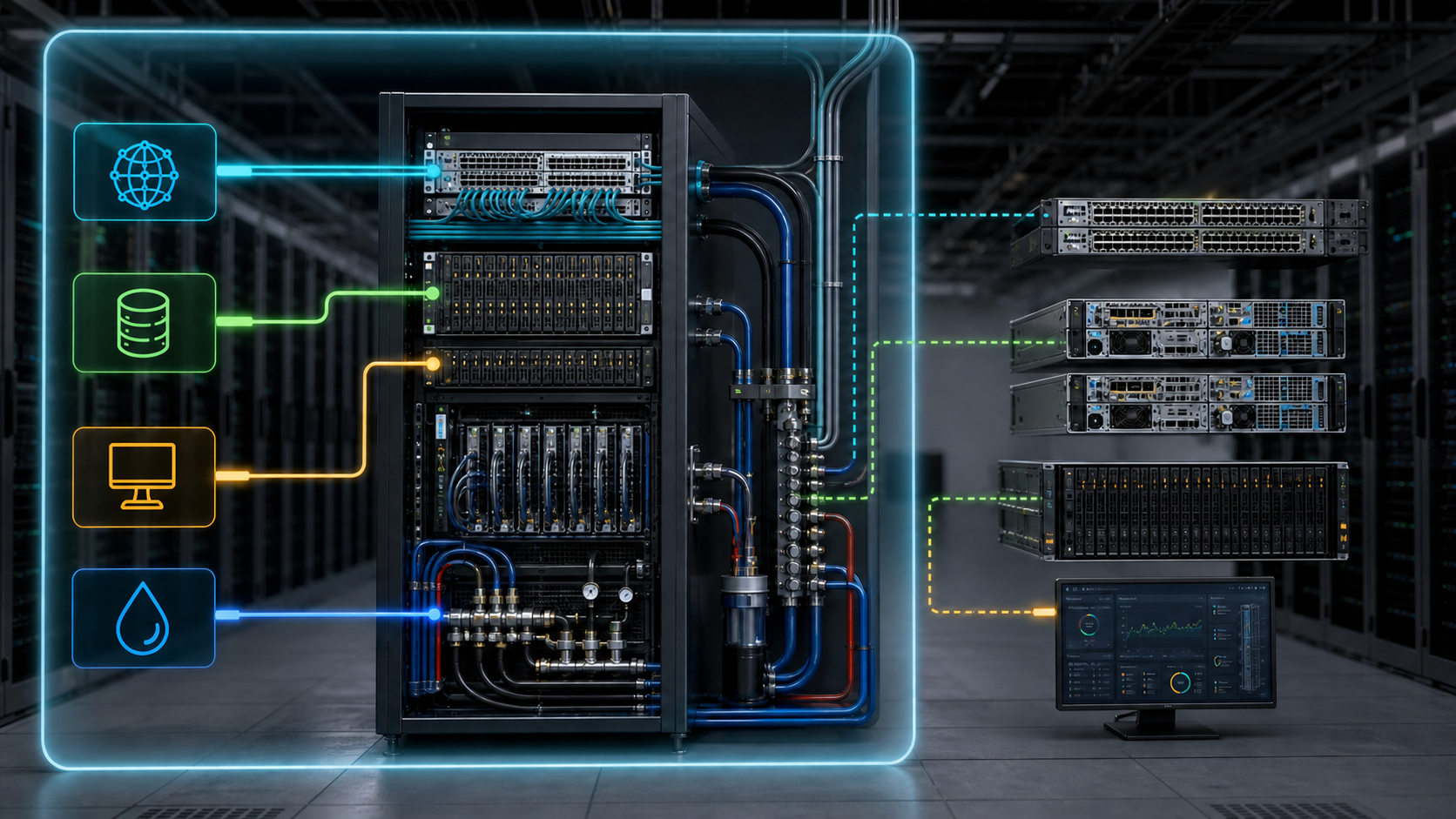
A support contract becomes interesting when a training job fails at 2am and four suppliers can each argue that their component is healthy. The GPU server sees network timeouts, the switch counters show congestion, storage blames the client and the integrator asks for another trace. Cisco's expanded Secure AI Factory with NVIDIA is meant to reduce that ambiguity by placing Supermicro rack-scale compute, Cisco networking and a validated operating design inside one commercial structure.
That can be worth paying for. It can also make later substitutions harder.
The buying decision rests on the team, not the badge on the rack. A neocloud or sovereign AI operator without a large integration group may benefit from a reference architecture, pre-deployment validation and a clearer escalation path. An experienced HPC team with an established scheduler, storage platform and fabric standard may spend more to replace working practices with somebody else's approved stack.
Cisco announced the expansion on 25 August 2026 and said ordering would begin through its authorised channel ecosystem in October 2026. Until final bills of materials, partner combinations and commercial terms are quoted, buyers should treat it as an upcoming architecture rather than an installed outcome. GPUMachines has not tested the Cisco design and does not claim authorisation to resell the complete Cisco offer. This article interprets Cisco and NVIDIA's public material for infrastructure buyers; GPUMachines can compare that route with independently specified GPU systems, subject to vendor and channel availability.
The short answer
Buy a validated full-stack architecture when the cost of integration delay, fragmented support or failed acceptance testing exceeds the premium and loss of component freedom. Do not buy it merely because a reference design looks safer than making decisions.
An independent cluster is usually the better route when:
- the organisation already operates a proven Ethernet or InfiniBand fabric;
- a named storage system or scheduler must remain in place;
- the cluster is too small to justify a cloud-provider-scale operating stack;
- engineers need freedom to qualify new NICs, switches or servers on their own cadence;
- the commercial exit plan matters as much as first-day commissioning.
The Cisco/Supermicro offer deserves a serious evaluation for large, multi-tenant deployments. Smaller buyers should ask for the validation work they need without inheriting a cloud architecture they do not.
What Cisco announced
Cisco says the rack-scale Secure AI Factory will combine its AI networking and operations products with Supermicro liquid-cooled and air-cooled GPU systems. The published FAQ names Supermicro NVIDIA NVL72 rack-scale systems, HGX platforms and MGX-based dense servers.
The network layer may use Cisco Silicon One or NVIDIA Spectrum-X Ethernet switch silicon under the Cisco Nexus One architecture. Cisco lists a choice of NX-OS or SONiC. The wider design includes front-end, back-end and storage networks, NVIDIA AI Enterprise software, distributed security, Splunk observability, and storage and Kubernetes products from ecosystem partners.
Cisco also introduced Cisco Validated Infrastructure Services (CVIS). The company says CVIS will validate a customer's full-stack design against the reference architecture, using a large engineering AI cluster in Cisco's lab to check deployment tooling, software releases and performance profiles. Cisco Cloud Control provides the management umbrella; the FAQ says compute management through Intersight and Nexus One is planned for the fourth quarter of calendar 2026.
Several details must remain separate:
- Cisco announced an architecture and channel offer, not one fixed bill of materials for every customer.
- Storage and Kubernetes platforms come from ecosystem partners; the announcement does not make every partner product interchangeable.
- NCP compliance describes adherence to NVIDIA's cloud-provider architecture. It does not guarantee that a customer's model will hit a particular training or inference result.
- October 2026 is Cisco's stated ordering date, not a universal delivery promise.
Write those distinctions into the request for quotation. Marketing diagrams blur optional components very quickly.
What validation can remove from the buyer's risk
Rack-scale AI projects fail at their boundaries. A server may pass a factory test while the populated rack exceeds the available power envelope. A switch may forward line-rate traffic while the selected optics, cable lengths or congestion settings undermine distributed jobs. Storage can deliver an impressive sequential benchmark and still stall checkpoint bursts or metadata-heavy data loading.
A good validation programme tests those boundaries as one system. It should confirm firmware versions, cable maps, cooling assumptions, management access, workload placement and failure recovery before the customer's expensive GPUs sit idle on site.
Cisco has a plausible reason to own that work. It supplies the network and management layer, while Supermicro supplies dense GPU compute. NVIDIA defines the NCP requirements and software expectations. If CVIS produces a named configuration, test evidence and a responsibility matrix, the buyer gains something more useful than a compatibility logo.
The support route may improve as well. A single commercial lead can collect evidence across job health, NICs, optics, switch ports and compute nodes rather than asking the customer to mediate each vendor conversation. Cisco says its tools will correlate those signals. The procurement team should ask to see the exact workflow, retention, licensing and escalation process rather than assume that observability equals fault ownership.
What NCP compliance means
NVIDIA describes its Cloud Partner reference architecture as a starting point for large foundational-model training and GPU-as-a-service environments. Its public enterprise reference architecture paper says the NCP design starts at 128 nodes and can scale beyond 16,000 GPUs. The design supports InfiniBand and Ethernet, plus single-tenant and multi-tenant operation.
Rigidity is intentional. NVIDIA says the NCP architecture limits reconfiguration so its professional services teams can deploy a consistent design without repeating engineering work at each site. That consistency can shorten commissioning and make support evidence easier to compare across operators.
It also tells a smaller enterprise something useful: NCP compliance may solve a larger problem than the one it has. An eight-node research cluster does not automatically need the same provisioning interfaces, multi-tenant controls or service-delivery practices as a commercial AI cloud.
NVIDIA's separate Requirements for AI Clouds document extends well beyond the server fabric. It covers APIs, managed Kubernetes, service delivery, workload isolation, ancillary CPU capacity, data movement and operational targets. A buyer evaluating Cisco's NCP-compliant offer should ask which of those requirements form part of the quoted service and which remain the customer's responsibility.
Our AI Factory design guide starts with workload, facility and operating constraints before choosing a reference architecture. That order prevents a certification label from becoming the requirement.
Where lock-in enters the design
Lock-in is not simply the presence of one large vendor. It appears when changing a component forces the customer to repeat validation, retrain operators, replace management data or renegotiate support.
The validated bill of materials
Suppose a buyer wants to add a different storage system two years later. The hardware may work, yet the original performance profile and support boundary may no longer apply. Ask which substitutions preserve validation and who pays to re-test them.
The same applies to optics, NIC firmware, switch operating systems and Kubernetes distributions. A flexible line item in the quotation can still be constrained by the support matrix after purchase.
The management plane
Cisco Cloud Control, Nexus One, Intersight and Splunk can give one operational view. They can also concentrate configuration history, alerts and support workflows in a vendor-specific control plane. Export formats, API access, data retention and licence expiry deserve commercial attention.
An operator should be able to answer a blunt question: if the Cisco subscription is not renewed, which parts of the cluster continue to run and which management functions disappear?
Release timing
Validated stacks follow a qualification cadence. A new firmware release or serving feature may arrive before the approved combination catches up. Conservative operators may welcome that delay; research teams may find it restrictive.
The support boundary
One front door does not always mean one accountable party. The quotation should name who owns triage, who can open cases with Supermicro and NVIDIA, and who makes the final call when evidence points across products. Require response and restoration targets for the service level the cluster actually needs.
Validated stack or independent design
| Decision area | Cisco/Supermicro validated route | Independently specified cluster | |---|---|---| | Initial integration | Pre-defined architecture and CVIS validation may reduce unknowns | Integrator or customer owns qualification and evidence | | Component choice | Options remain inside the supported partner matrix | Wider choice, provided the operator can validate it | | Support | Potentially clearer commercial entry point | Contracts may split across server, network and storage suppliers | | Upgrade cadence | Tied to validated software and firmware combinations | Customer can move earlier and carries the resulting risk | | Management | Cisco tools provide a common operating layer | Existing open or vendor tools can remain in place | | Exit cost | May include revalidation and management migration | Architecture knowledge and documentation stay with the customer | | Best fit | Neocloud, sovereign AI and large enterprise platforms | Experienced HPC teams, bespoke research and smaller private clusters |
Neither column wins by default. The validated route buys transferred engineering work. The independent route retains choice but leaves the buyer responsible for proving that the pieces behave as one system.
Who should shortlist the Cisco architecture
A new neocloud
A provider selling GPU capacity needs repeatable deployment, multi-tenant controls and support evidence. NCP alignment can help it satisfy customers that ask how the platform was built. The operator must still model the economics of software subscriptions, spares and support.
A sovereign AI programme
These projects often need named data residency, auditable operations and a supply chain that procurement teams can document. One architecture and validation chain may simplify acceptance. Sovereignty still depends on who operates the management plane, where telemetry goes and whether the customer can continue operating without a remote vendor service.
An enterprise building its first large GPU estate
If the organisation has strong application teams but little rack-scale infrastructure experience, buying validated engineering can prevent months of remedial work. The facility must still provide the power, cooling, floor loading and service access required by the selected rack.
A service provider standardising several sites
Repeated sites benefit when cable maps, firmware, monitoring and acceptance tests remain consistent. Demand evidence that the design tolerates the differences between those facilities rather than assuming one lab profile transfers unchanged.
Who should probably decline it
A university department buying one or two HGX servers does not need an NCP operating model. It needs compatible servers, a correctly sized fabric, shared storage that fits the workload, and support the local team can use.
An established HPC centre may already have better operational knowledge than a new reference design captures. Replacing its scheduler, storage procedures or monitoring just to fit a commercial bundle creates work rather than removing it.
Teams running unusual scientific software should also qualify the application first. A stack designed around large-model training and GPU-as-a-service may be technically capable yet commercially excessive. Current HGX server options can be designed into smaller clusters without adopting an entire cloud-provider architecture.
Finally, avoid a full-stack purchase when the business case still depends on speculative demand. Hosting or rented capacity can test utilisation before capital is committed. GPUMachines' Buy & Host route offers another division of responsibility: the customer owns specified equipment while the hosting provider supplies the facility and remote operation.
Put the responsibility matrix in the RFQ
The useful document is not the product list. It is a table naming who owns each failure and decision.
Ask Cisco or the channel partner to identify responsibility for:
- rack power, liquid-cooling interfaces and environmental alarms;
- server firmware, GPU and NVLink faults;
- NICs, optics, cabling, congestion configuration and switch software;
- Kubernetes, scheduler, drivers and NVIDIA AI Enterprise;
- storage performance, data protection, monitoring and incident evidence;
- security response, management-plane availability and licence continuity.
Then require acceptance tests with pass criteria. Include a distributed workload, network impairment, GPU or link failure, storage checkpoint and node replacement. The workload test should use the customer's model or scientific code where possible; a generic burn-in proves stability, not application fit.
The RFQ should also state which changes trigger revalidation. A buyer needs to know whether adding a server, changing an optic or updating a container platform affects support.
Test the architecture in three stages
Factory validation should verify the quoted bill of materials, firmware set, cable schedule and management configuration. Record serialised evidence, not a generic certificate.
Site acceptance then checks the installed reality: rack position, power feeds, cooling flow, management access, fabric health and storage paths. A factory result cannot detect a crossed cable or a facility valve problem.
Workload acceptance comes last. Measure job completion, useful GPU time, checkpoint behaviour, inference latency and recovery from a named failure. Run long enough to expose thermal drift and intermittent links. Payment milestones should follow the evidence that matters to the buyer.
How GPUMachines would frame the choice
Start with the operating model. Who will run the cluster at 2am? Which team owns the network? Does the organisation want a standard cloud service, a research instrument or a shared internal platform?
Then compare two priced designs under the same acceptance plan. One can follow the Cisco/Supermicro route when the channel and requested components are available. The other can use independently selected compute, network and storage with explicit integration work. The comparison should include software renewals, validation, spares, training and the cost of changing components later.
GPUMachines can specify and source compatible GPU servers, cluster networking, storage and hosted deployment subject to manufacturer and distributor availability. We will not claim that an independent design carries Cisco CVIS or NCP status unless the quoted system has passed the relevant programme. Buyers exploring rack-scale NVIDIA systems can also read our Vera Rubin NVL72 explanation and the newer AMD Helios versus Vera Rubin comparison before selecting an accelerator family.
Frequently asked questions
Is Cisco manufacturing the Supermicro GPU systems?
No. Cisco says Supermicro liquid-cooled and air-cooled GPU systems will be offered through the authorised channel ecosystem as part of the wider architecture. Supermicro remains the system manufacturer.
Which GPU platforms are included?
Cisco's FAQ names Supermicro NVIDIA NVL72 rack-scale systems, NVIDIA HGX platforms and NVIDIA MGX-based dense GPU servers. The exact platform, generation and bill of materials must be confirmed in the customer quotation.
Does NCP compliance guarantee model performance?
No. It provides an architecture and validation framework for AI cloud infrastructure. Application performance still depends on the model, software, workload shape, scale and operating configuration. Require workload acceptance testing.
Can the architecture use SONiC?
Cisco says the Nexus One architecture will offer a choice of Cisco NX-OS or SONiC across the stated networking options. Buyers should confirm feature support, operational responsibility and the validated version for the quoted design.
Will Cisco supply the storage?
The announcement describes high-performance storage from ecosystem partners available through the channel ecosystem. It does not identify one mandatory storage product for every deployment. Confirm the selected partner, support path and performance test.
Is a validated AI Factory cheaper than an independent cluster?
There is no general answer. A validated design may cost more in products and services while avoiding engineering delay and fragmented support. An experienced team may build a lower-cost independent system because it already owns the skills and tools. Compare complete quoted costs and acceptance risk.
Can GPUMachines source an alternative design?
GPUMachines can prepare a compatible server, network, storage and hosting specification using available manufacturer platforms. Supply, authorisation and support terms depend on the chosen vendors and region. The GPU Cluster Configurator can establish the initial scale before detailed validation work.
Sources and further reading
- Cisco: Secure AI Factory expansion announcement
- Cisco: Rack-scale Secure AI Factory FAQ
- NVIDIA Enterprise Reference Architecture overview
- NVIDIA Requirements for AI Clouds
- NVIDIA Cloud Partner software reference guide
- NVIDIA inference reference architecture
Verdict
Cisco and Supermicro are selling transferred integration work as much as hardware. For a new neocloud, sovereign platform or enterprise without a rack-scale engineering group, that work can shorten commissioning and make support easier to manage. CVIS will be valuable only if it produces customer-specific evidence and a responsibility matrix.
Experienced operators should protect their freedom to change storage, software, optics and management tools. Ask what happens to validation, support and operations when any one of those components moves outside the approved combination. If the answer is vague, the architecture has hidden exit costs.
Use the GPU Cluster Configurator to establish the compute and fabric scale, then request both a validated-stack quotation and an independent alternative against the same workload acceptance test. The lower purchase price is not automatically the cheaper project; neither is the largest support logo automatically the safer one.